The VPN market is booming, with projections showing it could reach a staggering $350 billion by 2032. That’s a 670% growth from 2022. Today, 42% of Americans use these tools for regular browsing, reflecting a growing concern for online privacy.
As more people turn to VPNs, questions arise about how much information these services retain and who might have access to it. Understanding the policies of your chosen provider is crucial for maintaining your security.
At our core, we focus on providing unbiased, tested reviews to help professionals make informed decisions. Let’s dive into the details to ensure you’re fully aware of how these tools work and what they mean for your privacy.
Introduction to VPNs and Online Privacy
In today’s digital age, safeguarding your online activities has become a top priority. VPNs have emerged as essential tools for modern internet users, offering a layer of protection against prying eyes. These services create encrypted tunnels that reroute your traffic, bypassing ISP monitoring and ensuring your browsing remains private.
While many believe VPNs provide complete anonymity, the reality is more nuanced. Providers can still see certain aspects of your activity, depending on their policies. This contrast between perceived anonymity and actual data visibility is crucial to understand.

Recent events, like the 2023 SuperVPN breach that exposed 360 million records, highlight the risks involved. Such incidents underscore the importance of choosing a reliable service that prioritizes your security and online privacy.
By understanding how these tools work and their limitations, you can make informed decisions about protecting your digital footprint. Let’s explore the foundation of provider-level vulnerabilities to ensure you stay secure online.
How VPNs Protect Your Data
With cyber threats on the rise, VPNs have become essential tools for protection. These services safeguard your online activities through advanced technologies like encryption and IP masking. Understanding how these features work can help you maximize your security.
Encryption and Secure Tunnels
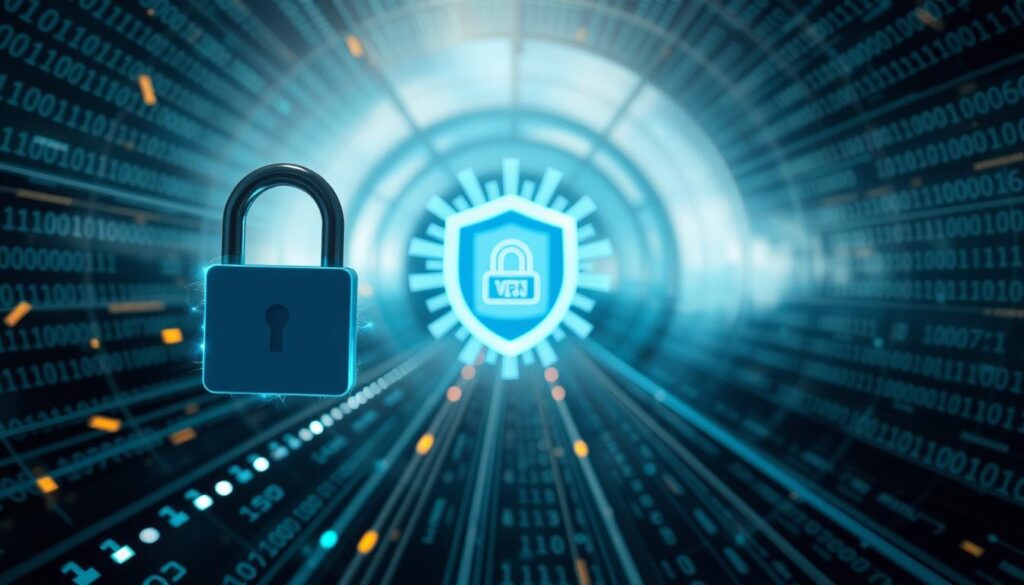
At the core of a VPN’s functionality is encryption. Most services use AES-256, a military-grade standard that scrambles your traffic into unreadable code. This ensures that even if intercepted, your information remains secure.
Your data travels through secure tunnels, acting as impenetrable pipelines. These tunnels reroute your traffic through remote servers, shielding it from ISP monitoring. While this setup offers robust protection, it’s important to note that encryption doesn’t prevent provider-side logging.
Masking Your IP Address
Another key feature is IP masking. When you connect to a VPN, your real IP address is replaced with a temporary one from the service’s servers. This makes it nearly impossible for third parties to trace your location or identity.
By relocating your IP address, VPNs add an extra layer of anonymity. However, the effectiveness of this feature depends on the provider’s policies. Always choose a service that prioritizes your privacy.
What Data Do VPN Providers Collect?
Many users are unaware of the extent of details collected by their chosen tools. While these services enhance privacy, they often retain specific user data for operational purposes. Understanding what is logged can help you make informed decisions about your online security.

User’s IP Address and Location
Even when masking your IP, providers can still see your original address. This is necessary for routing your connection through their servers. However, reputable services delete this information immediately after your session ends.
Connection Metadata
Providers often log metadata, which includes details like session duration, data volume, and timestamps. This activity data helps them optimize performance but can also reveal patterns about your usage. Always check if your service minimizes these logs.
User Activity and DNS Queries
DNS requests can expose your browsing history, especially if leaks occur. Some services track these DNS queries to improve functionality. Bandwidth usage also indicates whether you’re streaming or browsing, which can be monetized by free providers.
Free tools often monetize collected user data, making them less secure. Always opt for services with transparent policies and minimal logs to safeguard your privacy.
What Data Can Governments Access from VPN Providers?
Jurisdiction plays a critical role in determining what details are accessible. Legal frameworks, such as mutual assistance treaties, often enable authorities to request specific information from providers. These agreements allow countries to collaborate in sharing data, even across borders.
For example, the 2023 FBI request to NordVPN highlighted how legal processes can compel providers to disclose certain details. This case underscores the importance of understanding the legal landscape surrounding your chosen service.

Providers based in countries with strict privacy laws, like Panama, often offer better protection. In contrast, those operating under the Five Eyes alliance or similar surveillance protocols may face greater pressure to comply with government requests. This distinction is crucial when selecting a service.
Compelled disclosure scenarios are another factor to consider. If a provider retains logs, they may be legally obligated to share this information. This is why no-log policies are a key feature of trustworthy services.
Real-world cases, such as geo-blocking evasion efforts, also highlight the tension between user privacy and lawful surveillance obligations. While these tools enhance security, they must still operate within legal boundaries.
By understanding these dynamics, you can make informed decisions about your online privacy. Always choose a provider with transparent policies and a strong commitment to protecting your information.
No-Log Policies and Their Importance
No-log policies are a cornerstone of online privacy, ensuring your activities remain confidential. These policies mean that a service does not retain records of your session, connection, or user data. This is crucial for maintaining trust and security in today’s digital landscape.
Leading providers like NordVPN and Surfshark have undergone independent audits to verify their no-log claims. These audits provide transparency, helping users feel confident in their choice. For example, NordVPN’s no-log policy has been validated by PricewaterhouseCoopers, while Surfshark’s has been tested by Cure53.
Jurisdiction also plays a key role. Providers based in privacy-friendly countries, like Panama or the British Virgin Islands, are less likely to face legal pressure to share user data. This adds an extra layer of protection for your online activities.
Technical implementations further enhance security. For instance, ExpressVPN uses RAM-only servers, which automatically erase all information when powered off. This ensures no logs are stored, even temporarily. Similarly, Perimeter81’s zero-log architecture guarantees that no session details are retained.
A 2023 CyberNews study revealed that 60% of services still retain some logs, despite claiming otherwise. This highlights the importance of choosing a provider with a proven track record. By prioritizing no-log policies, you can safeguard your privacy and avoid potential breaches.
Risks of Data Breaches in VPN Services
Data breaches in VPN services have become a growing concern for users worldwide. Incidents like the SuperVPN breach, which exposed 360 million records, and the 2024 UFO VPN incident, which compromised payment details, highlight the vulnerabilities in these systems. Understanding these risks is essential for maintaining your protection online.
Common attack vectors include unsecured APIs and poor encryption. These weaknesses allow hackers to infiltrate systems and access sensitive information. For example, unsecured APIs can expose user credentials, while weak encryption makes it easier for attackers to intercept data.
Leaked connection timestamps and IP data can have severe consequences. This information can reveal your browsing habits, location, and even identity. Such breaches not only compromise your security but also erode trust in the service.
Free services often have higher breach rates compared to paid ones. While free tools may seem appealing, they frequently lack robust protection measures. Paid services, on the other hand, invest in advanced technologies to safeguard your data.
Here’s a checklist to evaluate a provider’s security posture:
- Check for strong encryption standards like AES-256.
- Verify if the service has undergone independent audits.
- Ensure the provider has a clear no-log policy.
- Look for certifications like SOC 2, which Perimeter81 has achieved.
Perimeter81’s SOC 2 certification sets an industry benchmark for security. This certification ensures that the provider adheres to strict standards for protecting user data. By choosing a service with such credentials, you can significantly reduce the risk of data breaches.
Staying informed about these risks empowers you to make better decisions for your online protection. Always prioritize services that prioritize your security and transparency.
How to Choose a Secure VPN Provider
Selecting the right VPN provider is a critical step in ensuring your online security. With so many options available, it’s essential to focus on key features that align with your needs. Let’s explore what to look for when making this important decision.
Key Features to Look For
Start by prioritizing encryption standards. Military-grade AES-256 encryption ensures your data remains secure, even if intercepted. Additionally, a kill switch is a must-have feature—it automatically disconnects your internet if the VPN drops, preventing data leaks.
Next, evaluate protocol options. OpenVPN is widely trusted for its balance of speed and security, while WireGuard offers efficiency and faster performance. For example, WireGuard’s benchmarks show it’s ideal for high-speed connections, making it a top choice for many users.
Server locations also matter. Providers like Perimeter81 offer 35 global locations, ensuring you can connect from virtually anywhere. More servers mean better performance and reduced latency, especially for business-focused users.
Reputation and Reviews
Reputation is another crucial factor. Look for providers with independent audits from firms like Cure53. These audits verify claims, such as no-log policies, giving you peace of mind about your privacy.
Real-world speed tests across different server locations can also help you gauge performance. Reading user reviews and expert opinions provides valuable insights into reliability and customer support. For instance, Perimeter81’s 24/7 support is a standout feature for businesses needing immediate assistance.
Finally, assess business-focused features like SCIM provisioning, which simplifies user management for teams. By considering these factors, you can choose a VPN provider that meets your security and performance needs.
Additional Measures to Protect Your Online Privacy
Enhancing your online privacy requires more than just a single tool. While VPNs are a great start, combining them with other measures can significantly boost your security. Let’s explore some advanced strategies to fortify your digital defenses.
One effective approach is using multi-hop configurations. This routes your network traffic through multiple servers, adding extra layers of encryption. For maximum anonymity, consider pairing your VPN with Tor. This combination ensures your activities remain hidden from prying eyes.
DNS hardening is another critical step. Implementing DNS-over-HTTPS encrypts your queries, preventing leaks that could expose your browsing history. This technique complements your VPN, ensuring comprehensive privacy across all devices.
For added security, hardware keys like YubiKey offer robust authentication. These physical devices protect your accounts from unauthorized access, even if passwords are compromised. Regularly auditing your digital footprint is also essential. This helps identify and eliminate traces of your online activities.
Businesses should adopt corporate policies for secure remote work. Templates for network usage and device management ensure employees follow best practices. By combining these measures, you can create a robust framework for safeguarding your privacy in today’s digital landscape.
Conclusion
Protecting your online presence requires more than just basic tools. A VPN is essential, but its effectiveness depends on features like no-log policies. These policies ensure your activities remain private, even under legal scrutiny.
For businesses, enterprise-grade solutions like Perimeter81’s zero-log guarantee offer added security. Consumers, on the other hand, should prioritize transparency and independent audits when choosing a service.
Here’s a quick checklist to enhance your privacy:
- Verify no-log policies through third-party audits.
- Combine your VPN with tools like DNS hardening.
- Regularly review your digital footprint for vulnerabilities.
While VPNs are crucial, they’re just one part of a comprehensive security strategy. Explore hands-on testing resources and free trials to find the best fit for your needs.